How to Choose a Manned eVTOL: 7 Key Factors for Commercial Buyers
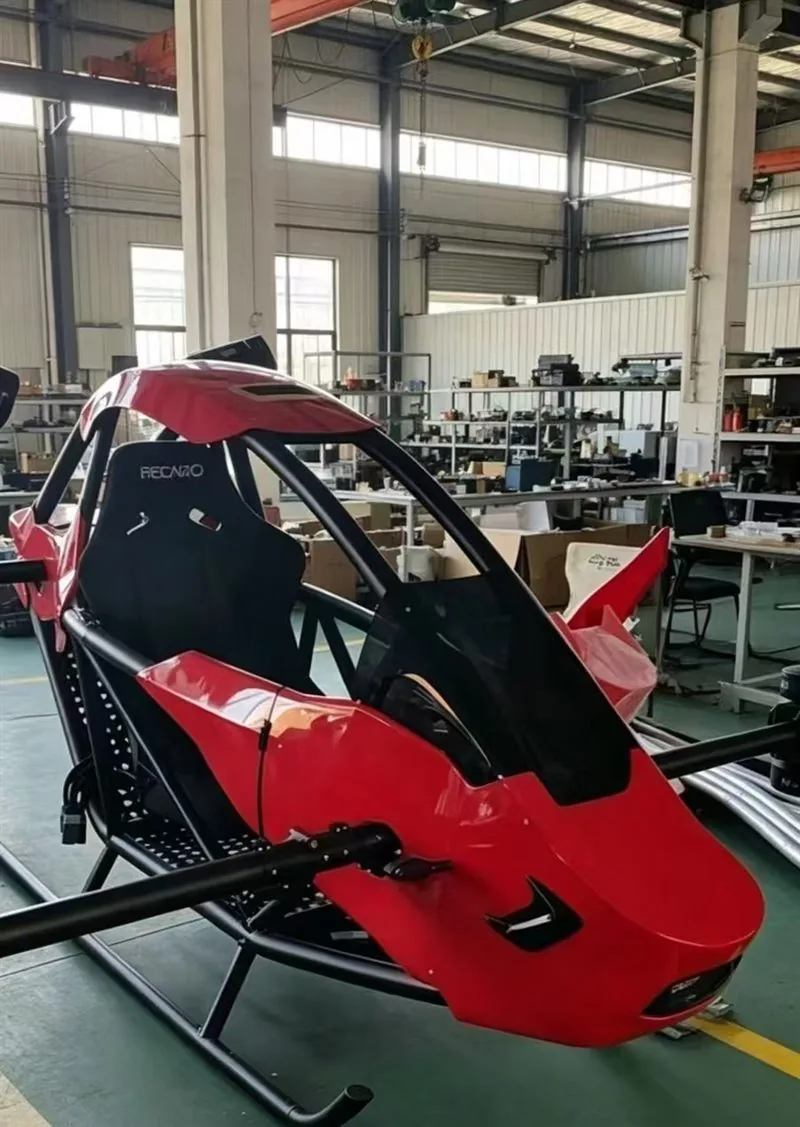
Investing in a manned eVTOL aircraft represents a major capital decision for flight-training institutes, inspection service providers and industrial operators. Many buyers focus only on range or top-speed marketing numbers and overlook the practical operational constraints that shape day-to-day field performance. Before you sign a purchase contract, evaluate these seven core factors to select the most suitable single-seat manned eVTOL for your business mission.
1. Match Payload Capacity to Your Real Mission Load
Maximum payload is not just about pilot weight. If you plan to carry extra sensors, cameras or auxiliary equipment during inspection or patrol flights, you need to calculate total combined weight: pilot plus all onboard accessories.
Different eVTOL variants deliver different payload grades. Entry-level training platforms may support around 90 kg maximum payload, while upgraded commercial-utility models increase max payload to 120 kg for heavier onboard equipment. The X7 SE sits at the training end of that range with 198.4 lbs, while the X7 PLUS raises the ceiling to 264.6 lbs on the same airframe.
Purchasing an aircraft with insufficient payload will force you to remove mission-critical hardware, limiting what work you can complete in flight. Always reference full-load official datasheet payload instead of promotional estimated figures.
2. Full-Load Endurance & Practical Mission Range
Manufacturers often publish theoretical range under ideal lab testing environments. Commercial buyers must prioritise full-load cruise time, which reflects real-world flight when carrying maximum payload.
- Flight-training and short inspection tasks: 30-minute full-load endurance can satisfy most daily training cycles.
- Long-distance patrol or continuous site survey: look for extended-endurance variants reaching 50-minute cruise time to reduce how often you return to base.
Do not rely purely on mile-range data; flight time is more straightforward for planning daily shift schedules.
3. Battery Workflow: Hot-Swap versus Onboard Charging
Battery turnaround directly decides how many sorties you can complete each working day. Two primary workflows exist for electric eVTOL: slow onboard charging and hot-swap quick battery replacement.
If your operation needs multiple successive flights, choose a platform supporting a fast hot-swap lithium-battery design. A 2-minute battery-swap system lets crews replace discharged packs and restart flight without waiting for charging cycles. This feature is highly valuable for commercial service teams with tight daily task schedules.
For sites with low flight frequency, standard charging workflows may meet your needs, but remember to calculate charging downtime into your operational planning. We run the sortie arithmetic for both workflows in the eVTOL battery swap guide.
4. Transportability & Storage Requirements
Can your eVTOL be moved between different work locations? Many commercial teams need to deploy aircraft across multiple job sites, not only operate from one fixed vertiport. Check for quick-release folding arms: the carbon-fiber foldable structure lets the aircraft fit inside a standard commercial van, removing the need for specialised transport trailers or large dedicated hangar space. Every X7 model ships with this configuration — see the X7 MAX long-range airframe for the folded dimensions.
Non-foldable manned eVTOL creates extra logistical burdens for field-mobile projects.
5. Navigation & Flight-Safety-Related Hardware
For commercial missions, stable positioning and flight-data recording are not optional extras. Dual-satellite navigation combining GPS and BDS improves positioning reliability in mountainous, wooded or complex-terrain environments. Pre-set route-planning functionality simplifies repetitive patrol and inspection routes for operators.
Additionally, look for a built-in flight-data recorder (black box). It continuously logs altitude, speed, aircraft attitude and battery health data. These logs support routine maintenance troubleshooting and compliance documentation for local aviation regulators.
6. Local Aviation Regulatory Compliance
Even with excellent hardware performance, your manned eVTOL project cannot run without respecting regional aviation rules. Before purchasing:
- Confirm local altitude-operation restrictions — many ultralight manned eVTOL limit flight altitude under 500 m / 1,640 ft.
- Clarify pilot-certificate or training requirements for manned electric vertical-flight craft.
- Understand permitted use cases: whether local authorities allow commercial inspection, training or patrol operations with ultralight eVTOL.
Manufacturer specifications cannot override national or local aviation law. Good suppliers will provide complete export documentation to help buyers complete local import formalities. Start from the source — the FAA publishes the US ultralight rules, and the European Union Aviation Safety Agency publishes the European framework. Our eVTOL certification guide covers how both are applied in practice, and the manned eVTOL import guide covers what the documents actually need to contain at the border.
7. Manufacturer After-Sales & Export-Oriented Technical Support
For overseas buyers, hardware specs are only half of the project. Reliable manufacturer support makes a significant difference to the long-term ownership experience. Ask potential suppliers these practical questions:
- Can they provide full export documentation for customs clearance?
- What does global technical support cover?
- Are spare-part kits for motors, batteries and carbon-fiber components available for overseas shipment?
- Is operator-training material supplied together with aircraft delivery?
Avoid vendors who only sell hardware without long-term spare-part and technical assistance for international clients.
How EAGLOX eVTOL Models Fit Different Mission Profiles
Once you have clarified the seven factors above, you can map requirements against product configurations:
- EVTOL-X7 SE — entry level for flight training and personal recreational flight, suitable when the priority is cost-effective pilot training.
- EVTOL-X7 PLUS — higher-payload variant for commercial inspection and utility-oriented field assignments.
- EVTOL-X7 MAX — extended-range and longer-endurance version built for long-distance patrol and short shuttle missions.
All three series share a foldable carbon-fiber airframe, roughly 2-minute battery hot-swap, GPS + BDS dual navigation and a built-in flight-data recorder. The difference lies in range, flight time and maximum payload capacity.
Closing Tips
When choosing a manned eVTOL, resist overspecifying for features you will never use. The best aircraft is the one that matches your real-world mission requirements, local regulatory environment and after-sales support expectations. For the wider context — weight definitions, use cases and hardware features — read our ultralight manned eVTOL overview.
Want the seven factors applied to your shortlist?
Send the models you are comparing and your mission profile — we will send full datasheets, configuration options and export-project pricing.