Importing a Manned eVTOL: Shipping, Customs and Duty Explained
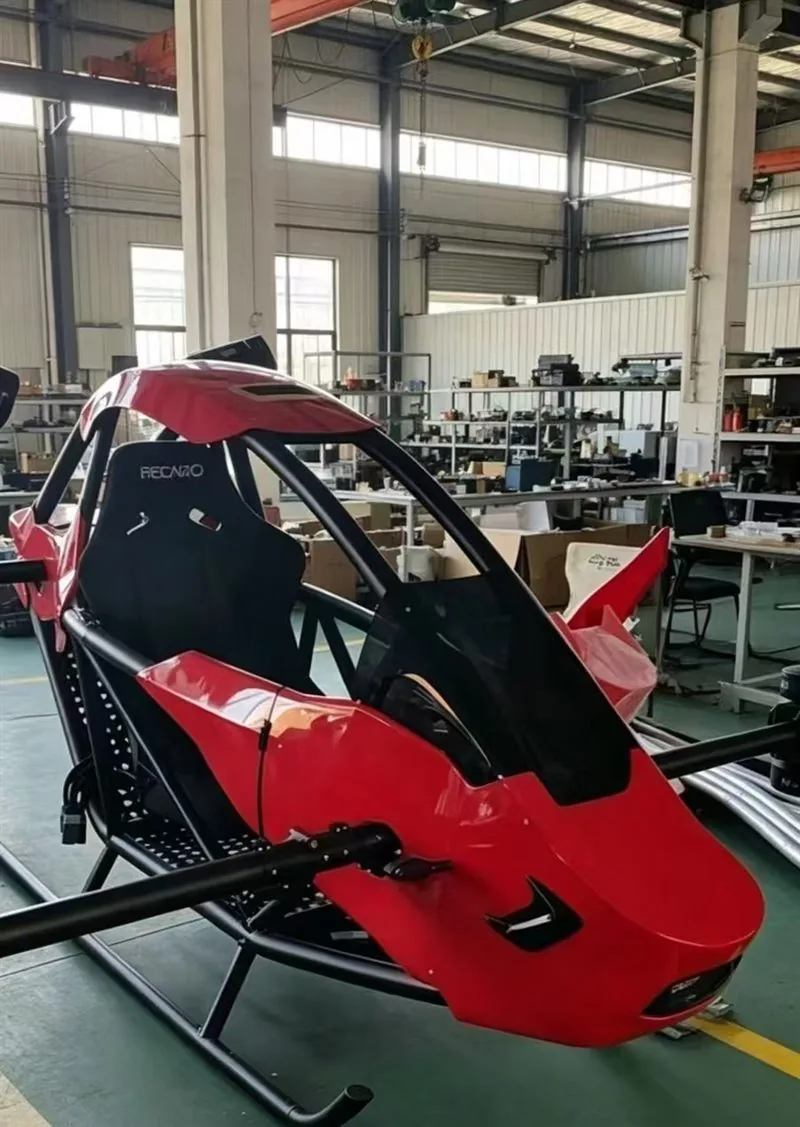
Buyers usually arrive at the shipping question late, after the airframe, options and price are agreed. That is the wrong order. Freight arrangements sit upstream of almost every commercial term in an eVTOL contract: whether the price you were quoted includes delivery, who is the importer of record, when you can realistically fly, and how much you pay before the aircraft is released from the port.
This guide walks the import chain in sequence, from classification through to the day the crate comes off the truck. It is written for a buyer bringing one or a small number of single-seat manned eVTOL aircraft into their own country, which is the situation for most flight schools, inspection firms and distributors.
Step 1: Confirm you can legally operate it before you buy
This is not a logistics step, but it belongs first because everything downstream depends on it. Classification, duty and freight are all solvable problems. A national aviation authority that has no route for your aircraft is not.
Get your national authority's answer in writing on two points: which regulatory class the aircraft falls into, and whether your intended use counts as commercial operation. Our eVTOL certification guide covers the frameworks — FAA Part 103 in the United States, EASA SC-VTOL and the national ultralight schemes in Europe, and the experimental routes common in the Gulf and Southeast Asia.
A useful rule of thumb from the many import files we have supported: if the answer to the second question is "commercial", the paperwork burden rises sharply and the timeline is measured in months, not weeks. Budget for that before you budget for freight.
Step 2: Nail down the HS classification and duty
Customs does not classify an aircraft by its marketing name. It classifies it by the tariff schedule, and the code determines your duty rate, your import permit requirements and sometimes whether the goods are restricted at all.
The two classifications you will see quoted
Suppliers and brokers commonly quote one of two routes:
- Heading 8802 — aircraft, including helicopters and powered aircraft. This is the natural home for a manned aircraft and is where most buyers expect to land.
- Heading 8806 — unmanned aircraft. Some brokers reach for this because it is the code they use daily for drones, and it is the wrong classification for an aircraft carrying a pilot.
Getting this wrong is expensive in both directions. Classified under 8806 as an unmanned aircraft, an inspection or patrol operator may find that local rules for commercial drone operation do not actually cover a flown aircraft, and the customs entry has to be corrected later. Classified under 8802, the duty rate in most jurisdictions is more favourable than the drone code, but the entry requires aviation-specific paperwork that a generic broker may not anticipate.
What to prepare
Rather than accepting a code from a supplier's invoice, give your customs broker the technical datasheet and the operator's manual and ask them to make the determination in your jurisdiction, in writing. The datasheet needs to state empty weight, maximum take-off weight, seating capacity, propulsion type and maximum speed — the same six numbers the tariff schedule uses. Ours is on the X7 SE product page and the equivalent pages for the X7 PLUS and X7 MAX.
Two further items belong in the same conversation: whether your country applies additional duty or VAT/GST to light aircraft, and whether the aircraft qualifies for any preferential rate under a trade agreement. Both are jurisdiction-specific and change; your broker's answer should be dated.
Step 3: Plan the lithium battery shipment
The airframe and the battery pack do not travel under the same rules, and on most routes they do not travel on the same paperwork. This is the single most common cause of a shipment sitting in a warehouse for a week.
Why the pack is the hard part
A lithium battery shipped on its own is regulated dangerous goods. It needs a UN38.3 test summary covering the cell and pack, a material safety data sheet, a dangerous goods declaration, appropriate packaging and labelling, and often a state-of-charge limit — commonly 30% for air freight. Air carriers frequently refuse standalone packs entirely, or accept them only with a forwarder that holds the right dangerous goods certification.
The two workable structures
- Sea freight with the pack in the crate. Slower — typically four to eight weeks door to door depending on route — but the pack travels as part of the aircraft consignment and the documentation burden is simpler. This is the default for most single-unit orders.
- Air freight for the airframe, sea or specialised air for the pack. Faster for the aircraft, but you are now coordinating two shipments with different arrival dates. Only worth it when the aircraft is needed for a specific date.
Either way, do not accept "battery included, no problem" as an answer. Ask which structure your supplier is using, who holds the dangerous goods documentation, and what the pack's state of charge will be on departure.
Step 4: Understand what the crate protects
A manned eVTOL is a carbon-fibre structure with six exposed arms and rotor assemblies. It is light for its size, which means freight forwarders routinely underestimate how much packaging it requires. Two things matter more than crate thickness.
Fold-down and internal bracing
The carbon-fibre arms fold, which brings the airframe down to a size that fits a standard van — and, in a crate, to a size that avoids out-of-gauge freight charges on many routes. Inside the crate the airframe needs bracing that holds the fuselage, not just the crate walls, so that the aircraft cannot shift if the crate is tilted. Ask for photographs of a crated unit before yours ships; a supplier who cannot show one has probably not shipped many.
Moisture and shock
Sea freight through humid routes will put a container through wide temperature swings. Desiccant packs and a moisture barrier inside the crate protect carbon-fibre and electronics alike. Shock indicators on the outside are cheap and settle any argument about what happened in transit — insist on them, and photograph them before signing for delivery.
Step 5: Choose the incoterm deliberately
The incoterm decides where your risk and your cost begin. For eVTOL imports the practical choice is usually between two.
| Term | Supplier handles | Buyer handles | Best when |
|---|---|---|---|
| FOB (port of loading) | Export clearance, inland transport, loading | Ocean or air freight, insurance, import clearance, final delivery | You have a forwarder you trust and want control of the route |
| CIF (port of destination) | Freight and minimum marine insurance to destination port | Import clearance, duties and taxes, port charges, final delivery | You want one number for the sea leg without managing the carrier |
| DAP (named place) | Everything to your site, excluding import duty and tax | Import clearance and duties | You want the crate at your hangar with minimum coordination |
| DDP (named place) | Everything including duty and tax | Nothing beyond receiving | Rarely advisable on aircraft — the importer of record should be you |
Two cautions. CIF covers only minimum insurance, which will not replace a damaged airframe at full value — buy your own cover or agree the insured value explicitly. And DDP makes the supplier the importer of record in your country, which can create problems later when you try to register or resell the aircraft in your own name. Most of our buyers choose FOB or DAP, and take responsibility for the import entry themselves.
Step 6: The document set at delivery
When the crate arrives, the paperwork matters as much as the aircraft. A complete shipment includes:
- Commercial invoice and packing list — with the HS code your broker confirmed, not a generic one.
- Bill of lading or air waybill — the release document; nothing leaves the port without it.
- Certificate of origin — needed for preferential duty rates and often for registration.
- Factory test report and flight test record for the specific serial number.
- UN38.3 test summary and MSDS for the battery pack.
- Operator and maintenance manuals — check they are in the language your authority requires before the crate ships, not after.
- Manufacturer's Statement of Origin on request — useful for registration files.
What no supplier can provide is your local airworthiness or operating approval. That certificate is issued to you, the operator, by your authority. Any manufacturer claiming otherwise is either misunderstanding the process or overstating what they can deliver.
Step 7: Receiving inspection
Sign for delivery only after inspecting the crate exterior and the shock indicators, and note any damage on the delivery document before signing. Once signed clean, a transit damage claim becomes difficult.
Inside, check the airframe for shipping damage and correct any torque values your manual specifies, then commission the battery pack according to the manual before the first flight. Most suppliers include a commissioning checklist; if yours does not, ask for one. For a training school this is also the moment to schedule the instructor briefing that ships with the aircraft — before the first student, not after.
The import timeline you should plan around
For a single unit into a market that already recognises the aircraft class, a realistic sequence is: 30 to 45 days from deposit to factory completion, one to two weeks for crating and export clearance, four to eight weeks of sea freight, and one to three weeks for import clearance and delivery depending on your broker and port. That is roughly three to five months from deposit to first flight, most of which is freight and clearance rather than manufacturing.
Where the national authority has no established route for the class, add the certification or experimental approval timeline on top. That is the step that turns a four-month project into a two-year one, and it is why the certification question belongs at the start of this article rather than the end.
Want the export documentation pack for your country?
Tell us your delivery port and intended use — we will send the invoice template, HS classification notes, UN38.3 summary and crating specification so your broker can quote properly.